

And just like that, the 2026 transfer portal is closed. Flew by, didn’t it? Fifteen days is not very many days. They nonetheless contained multitudes: a couple thousand players entered, hundreds of rosters were overhauled, and the trajectories of dozens programs were altered for better and worse. The sheer pace of activity was both thrilling and bewildering, albeit less so the latter than ever before.
There are, obviously, more developments to come. Lots of players who went in the portal are still not committed to schools. The No. 1 player in the class of 2026 is still weighing his options. The draft decision deadline is weeks away. A surprise NBA coaching change could reopen a great team’s roster. The potential for fifth-year players to receive a late-breaking NCAA waiver — predicated on a potential age-based eligibility policy change already being discussed in committee — could make the summer weird. Plenty of major programs have key rotation holes to fill.
But the first great wave of 2026 roster movement has given us more than enough to chew on now. Here’s a first, incomplete list of everything that has stuck out so far — with plenty more still to come.
Florida is the clear national title favorite — and another great sign for college basketball
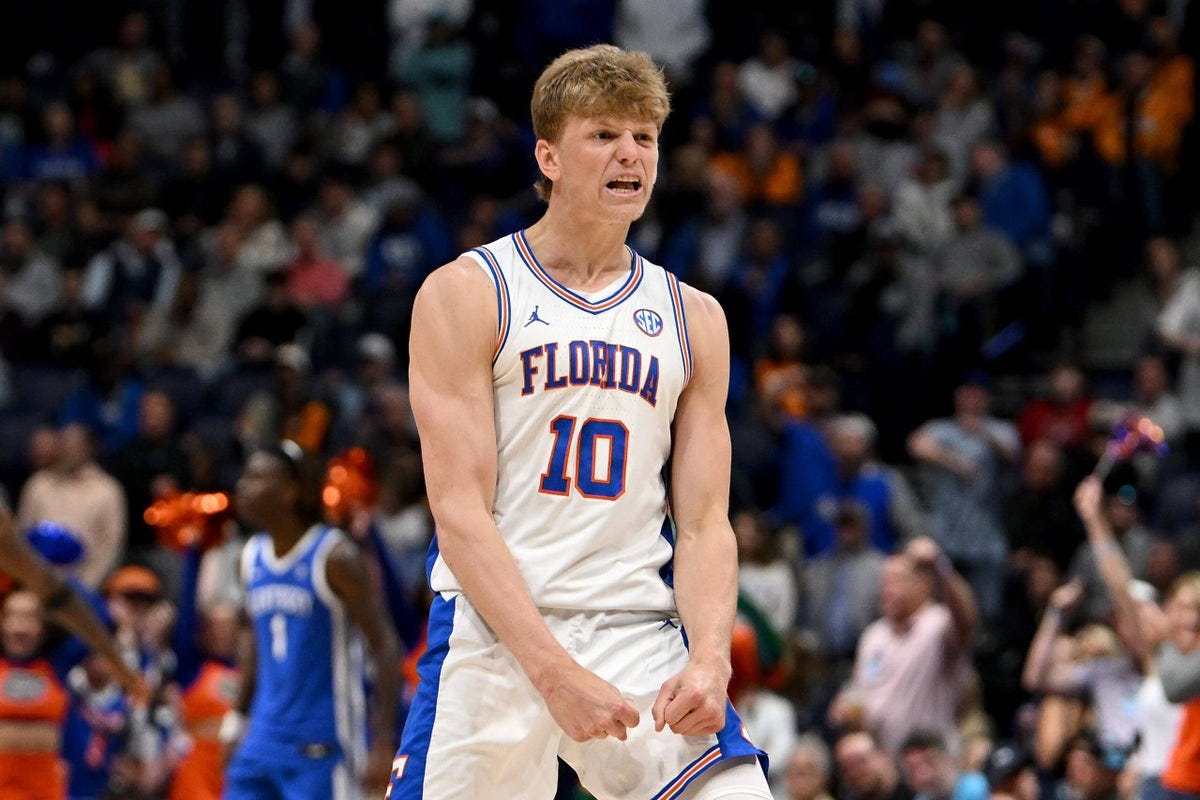
On Tuesday’s podcast, which Tate and I recorded Monday evening, we were floating around some of our portal thoughts when I realized I wasn’t sure what was going on with Thomas Haugh and Florida overall (or if, as was guaranteed to happen, there was any news that we’d missed while recording). Until we mentioned it, I had taken it as read that Haugh would at least go test the draft, and that Florida’s roster would be in a bit of flux until then. Haugh hadn’t officially announced his decision to come back to Gainesville; that came 12 hours later. But Tate said the rumblings were already out there, and a realization dawned in real time on the show: Holy hell, Florida was going to be scary.
It was a startling realization. This idea hadn’t occurred before. The thought of Haugh turning down a clear first-round NBA path — after at least looking in to the possibility of a pro turn the previous summer — seemed farfetched. The idea of Florida returning that entire frontcourt again seemed crazy.
But here we are, and so forget everything we always say now about doing “way too early” projections in the portal era. I’ve seen enough: Florida is the obvious 2027 national title favorite.
Boogie Fland is back. Florida seems convinced prodigal son Denzel Aberdeen will get a waiver, but even if he doesn’t Urban Klavzar (who was often in Florida’s best lineups last season) can jump in. And then they’re running back the Haugh-Alex Condon-Ruben Chinyelu front three, which Golden has already proven — after some fall 2025 stylistic awkwardness — can work. With respect to Xaivian Lee, this Florida squad is arguably better than last season’s, and that team spent huge stretches of the SEC campaign dominating everyone in their path.
This is crazy. It’s also awesome for college basketball.
A big part of the lament has always been that the portal and NIL makes teams impossible to hold together, that the incentives to start a new bidding war every spring are simply too strong — even for the best or most loyal players at top programs — to ignore. This is not at all what has happened with Florida (or with several other top teams this spring, which will be discussed throughout below). Indeed, it’s the opposite.
This is a clear upside of big money: Thomas Haugh, a potential but uncertain lottery pick, is arguably better off staying at UF for another season, where he will make yet more guaranteed life-changing cash without the downside risk of embarking on a professional career. Guys with far worse NBA chances than Haugh used to jump at the draft all the time. Suddenly, staying is the smart move.
Florida undoubtedly leveraged Haugh’s lifelong Gators fandom — his desire to be a legend like his own childhood heroes — in their pitch, too. But the point is that wasn’t their only pitch. The other part was money, now and beyond, and lots of it. That piece allowed Haugh to do what he really wanted to do all along anyway, without asking him to make massive and frankly stupid financial sacrifice. It allowed him to make a crucial life decision based on sentimentality. It made all else equal.
And so Florida will retain the core of one of the great teams of the past five years — the exact kind of classical, dominant, yeah-let’s-all-run-it-back-together groups the NIL era had supposedly killed off for good. This is the 2006-07 Florida Gators. This is Tyler Hansbrough, Ty Lawson, Wayne Ellington and Danny Green giving it one more go. This is an elite program convincing its best players to consider legacy and their time together. The only difference is that those decisions are made alongside money, rather than in opposition to it, and that money can be used for retention just as readily — and probably more efficiently — as an annual roster rebuild.
The more college basketball changes, the more it stays the same.
(Speaking of which: If Michigan, which has already retained Elliot Cadeau and Trey McKenney, gets similar draft decisions to Haugh’s from Morez Johnson and Aday Mara, then that whole sweeping take about Florida being the obvious favorite will get watered down a lot. This is Michigan we’re talking about. Johnson seems more likely than Mara to return, for what it’s worth, but we’ll see. There is also Duke. Duke is really good. There is also the Todd Golden question. But as it stands, Florida is No. 1.)
Kentucky keeps being a mess
If there was a defining characteristic to Kentucky’s disappointing 2025-26 season, beyond the misjudged and ill-fitting roster itself, it was the emotional intensity of it all. An early season loss to Louisville was bad enough on its own; Mark Pope’s strange wink-wink half-disclosure about a pregame locker room problem made it needlessly worse. Kentucky couldn’t just get rocked by a good Michigan State team at the Champions Classic; Pope had to make sure fans knew he viewed it is an existential crisis just as much as they did. Spending $22 million on a redundant roster that didn’t look like anything Pope had ever coached before was the original sin, sure. But the sense of chaos was especially damaging. The way the program, and specifically the head coach, handled early disappointments made fans feel like the grown ups maybe weren’t actually in charge after all. It was too messy.
It’s still super messy.
