

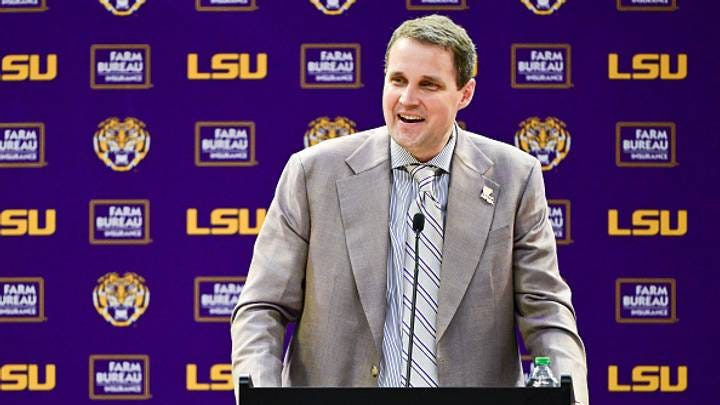
One of Buzzer’s very first posts, all the way back in June 2023, was a nominal ode to Will Wade. After years of drawn-out NCAA enforcement bureaucracy, the former LSU coach had just been punished for making those legendarily strong ass offers in Baton Rouge.
The whole thing was hilarious. By 2023, of course, the NIL era had already gone into overdrive. The very thing Wade was being sanctioned for — funneling cash to talented basketball players — was now the prime roster-building method in college sports. Yes, Wade had cheated the rules of his era, but like Kelvin Sampson being unable to put down the Palm Pilot stylus a few years before the NCAA stopped limiting coaches from messaging recruits, it was hard to take the violations remotely seriously in retrospect. Wade would retrench for a year or two at McNeese before returning to a high-major world that craved, rather than shunned, his particular set of skills. This gauche striver, college basketball’s Tom Ripley, would be embraced into the elite once and for all.
Obviously, Wade would thrive. Obviously, he would find professional peace.
Neither of those things has happened. Instead, Wade did a one-year stopover at NC State, where a flashy but ultimately flimsy squad underperformed expectations, and where the highlight — other than a blowout win over an injured UNC team — was probably an offseason Jimmy V photoshoot most Wolfpack fans now detest. Before April, Wade landed at a private airport in Baton Rouge, a shamelessly predictable homecoming that said everything about just how much college sports have changed.
And then a strange thing happened: Wade didn’t sign any players.
After the 2026 portal opened, as moneyed competitors started hoovering top-100 transfers, LSU just … didn’t do anything. For weeks Wade’s roster was effectively empty. Few high-profile programs, or at least high-profile coaches, stood so pat. The silence was eerie.
Then, eventually, the plan became clear: Wade was going to use his first LSU roster to flip the bird to the NCAA, and the rest of the sport, one more time.
At the risk of playing armchair psychologist, how else do you explain it? R.J. Luis is a professional basketball player! Under current NCAA rules — the same ones that held up when Nate Oats tried to ram Charles Bediako down the sport’s throat last winter — he has zero eligibility. He left St. John’s, stayed in the draft despite knowing exactly how much money he was likely giving up (and having the entire world tell him he was making a bad decision at the time, by the way), has signed multiple NBA contracts, and is apparently planning to play college basketball at LSU next season anyway. He obviously can’t play college basketball at LSU next season. But Wade is going to make the NCAA go through all this anyway.
There are four players on LSU’s current projected roster that make sense as potential college basketball players: Abdi Bashir (Kansas State), Mo Dioubate (Kentucky, where it didn’t work out), Divine Ugochukwu (Michigan State) and Austin Nunez (UTSA). Assuming Luis won’t be eligible — and there is, again, no reason he ever would be — the rest of LSU’s 2026-27 chances rely entirely on a raft of vaguely eligible international players to whom Wade has since promised Bayou Traditions donors’ cash.
Point guard Yam Madar — who was born in 2000, drafted by the Boston Celtics in 2020, and has played high-level EuroLeague ball for several years — was reported by an Israeli publication to have made a $5 million “agreement” with LSU. Specious on all fronts; it’s unclear whether Madar will be eligible, and if he is, for how long. (His military service may qualify him for an age-based eligibility carveout.) Saliou Niang, an international prospect who has never played college basketball before, and thus should probably be eligible, was nonetheless drafted 58th overall by the Cavaliers in 2025. Internationals Brice Dessert (born: 2003), Marcio Santos (2002), and Michael Ruzic (2006, hallelujah, but also a guy who played real minutes in Spain’s top league) are all on the squad. It is unclear to this publication which of these players, if any, are definitely able to suit up next season.
So. Either Will Wade …
Sort of messed up his first LSU build, despite hiring noted domestic recruiting bagmen Johnny Jones and Rick Stansbury to his staff, and then got a bit desperate, or
Is trolling.
The result is likely somewhere in the middle. Either way, it’s not good — and, unlike when Wade was punished for cheating a couple years before it was no longer cheating, also isn’t particularly funny.
The big problem is this: LSU’s roster strangeness has played out against a backdrop of ongoing NCAA eligibility uncertainty, an atmosphere that begs for self-leadership. Charlie Baker’s fast-tracked five-in-five proposal looks set to streamline the current inscrutable method by which some elder international players (and former fringe NBA draftees) seem to be granted eligibility, but the NCAA can’t do anything to address any of the problems people have with the talent pool if coaches keep trying to legally puncture it to their own advantage.
Another fun wrinkle — and to add to the confusion, organizationally self-inflicted this time — the NCAA is apparently in the process of “modernizing” its guidance on international players, which it distributed to schools May 8, as SI’s Kevin Sweeney detailed last week:
The guidance … lays out updated preenrollment eligibility requirements largely surrounding compensation and professional team involvement. How aggressively the requirements will be enforced is unclear, but they lay the groundwork for the NCAA to push back significantly on professional players in Europe and other top international leagues enrolling in college.
In part, the guidelines state that prospective student-athletes who “entered an agreement with, competed on or received compensation from a team that participates in a league with minimum compensation that exceeds actual and necessary expenses” will not have their college eligibility reinstated. The document lists MLB, NBA, NFL, Premier League and WNBA as examples of such leagues, but other top basketball leagues globally could also qualify.
It’s unclear how many international guys this would affect. We’ve heard different views. The vast majority of the players who have flooded into the US game are not compensated at their clubs remotely as well as they would be in high-major leagues, which is why the influx is happening in the first place. (This is how Nate Oats always knowingly misdirected his Bediako argument, when he tried to sell the idea that Alabama’s competitors were signing millionaire mercenaries by the dozen.) But there are big, important leagues that pay above the NCAA’s new threshold, and if the rules are applied strictly regardless of individual player status or compensation, they could significantly change the roster-building meta in seasons to come. (Jonathan Givony said the NCAA was making clear “international players are no longer welcome in the college game.” Seems bad.)
It’s equally unclear how quickly the organization would enforce these rules, and what impact that would have on the season to come. It would be pretty damn harsh if rosters built on contemporary guidance are thrown into flux in the same offseason. You can’t blame Wade, or any other coach, for not hewing to this guidance a month before it existed.
But still: the NCAA is at the very least interested in drawing a line between a 19-year-old developmental prospect who got a few games for his club’s first team and the well-paid 23-year-old professional starter for a EuroLeague outfit. This is not surprising, because this is what coaches complain about all the time. The latter profile clearly bothers the vast majority, has fostered confusion and disdain among fans, and it has created the rhetorical space for selfish whataboutery every time a new Bediako tries to sue the NCAA out of enforcing its own membership’s rules.
(There is also, now, the matter of the Protect College Sports Act, which US Senators Maria Cantwell and Ted Cruz unveiled Wednesday. It is a sweeping piece of legislation that would codify the NCAA House settlement and a five-year eligibility standard, restrict transfers, and basically prohibit any former pro, international or domestic, from playing in college. Does it seem super likely to pass the Senate with 60 votes? No. Nothing ever passes the Senate with 60 votes. But it is one more storm cloud on the horizon.)
Wade does not appear to care about any of this. If you glance around rosters all across the men’s game, you’ll find very few staffs who have so aggressively cared less about the things the NCAA is trying to work through this offseason. The Luis thing is a clear eff-you, obviously, but the specifics of these international players’ careers aren’t spiritually far behind.
It’s not enough for Wade to be able to openly pay players. It’s not enough that college basketball has legitimized the methods he was once ostracized for. It’s not enough that he has reconquered the spare-no-expense, win-at-all-costs fiefdom from which he was once forcefully expelled. Redemption isn’t enough. He seems determined to keep pushing every boundary he can, forever, no matter how it affects everyone else — and at the exact moment the sport needs solidarity and collective responsibility from its most high-profile figures. And for a bunch of guys that may not even end up playing at LSU!
It’s confusing, but it’s also just sort of gross. Will Wade, shameless goofball, used to be a thing we enjoyed. Strong ass offers! Har har. It used to be good fun. Now it’s wearing thin.
Anyway, with NCAA Tournament expansion official, the weirdness in Baton Rouge — and the way the various new rules and guidance have hovered above it — was the defining story of an otherwise relatively quiet May. (When, as you may have noticed, Buzzer has been on an impromptu sabbatical, a bit of mental recovery after the breakneck first four months of the year. [Also: Arsenal.] Thanks for understanding.)
There were transfer moves here and there, and rosters that looked ominously hollow in April have slowly filled out, but May held nothing like the overwhelming flurry of activity when the portal first opened and we filed part one.
But with the NBA draft return decisions settled and a host of crucial stars returning to college basketball, now is the time to catch up on everything worth tracking — and circle back to some of the more interesting teams we didn’t have the bandwidth to analyze a few weeks ago.
So … yeah. Let’s do that. Below we cover the continued satisfaction of star players returning to college, whether Milan Momcilovic helps Kentucky’s roster make sense, how Koa Peat’s decision affects Arizona, the state of the Muss Bus, Gonzaga’s moment of transition, Jeremy Fears’ importance, Arizona State, the game theory of being the last good player in the portal, and more.
Milan Momcilovic’s timing left Kentucky no choice
Look: Milan Momcilovic was going to get paid a lot of money this summer no matter how he structured his free agency. Momcilovic was the best shooter in the sport a year ago; he made 48.6 percent of his 280 attempts from 3, which is certifiably insane. Someone was going to give him a lot of money. It was a guarantee.
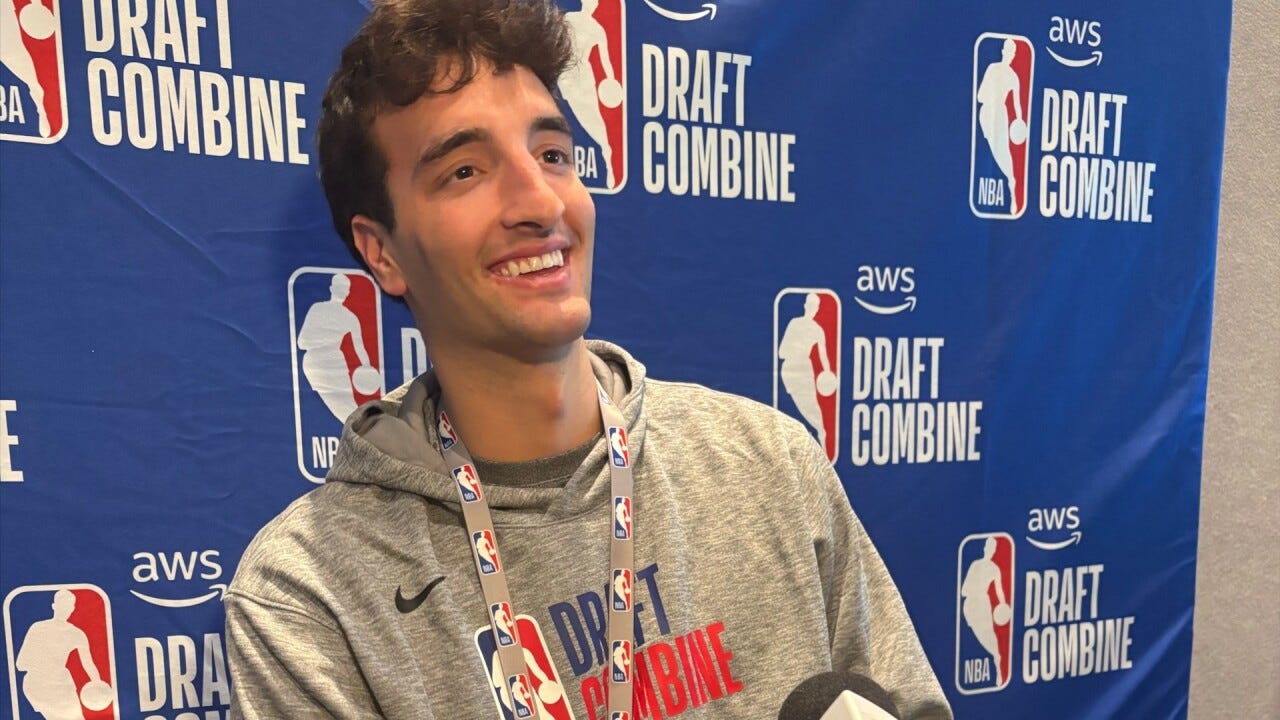
Still, it’s safe to say Momcilovic wrung every last drop of value from the past two months of his life. Not only did his up-to-the-deadline flirtation with the NBA draft draw out the most desperate college teams, but Momcilovic narrowed his choices just so, sparking a bidding war between, of all programs, Kentucky and Louisville, the two most moneyed programs in the sport and mutually obsessed rivals.
According to a variety of reports, Momcilovic’s deal with UK is worth about $6.5 million. Even if that’s inflated in the reporting, it feels safe to say Momcilovic wouldn’t have hit anything close to what he got — which will likely make him the highest-paid player in the sport next season — had he decided in the first week or two after the portal opened. By June 1, Kentucky couldn’t afford to let Momcilovic go anywhere else, least of all Louisville. They had no choice but to pay up.
The real question is whether the player himself can remotely justify that kind of contract on the floor — and whether Mark Pope’s latest roster fits together any better than the one that turned into a mess last season.